
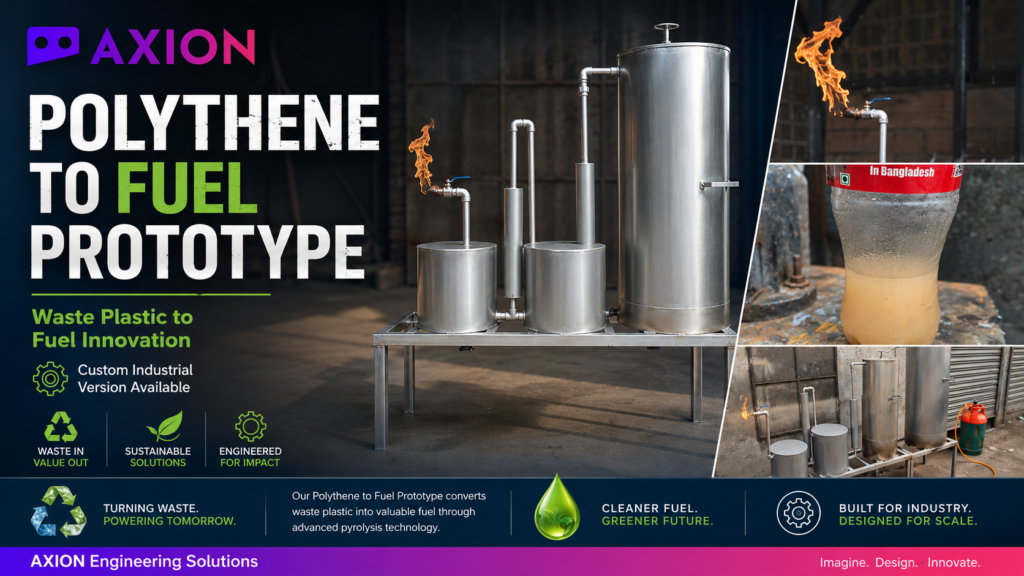
AXION Engineering Solutions has developed a polythene to fuel prototype in Bangladesh to explore practical plastic waste recycling and waste-to-energy technology. This locally developed system is designed to convert polythene and plastic waste into fuel-like hydrocarbon oil through a controlled thermal conversion process.
AXION Engineering Solutions has recently developed a prototype polythene waste to fuel conversion system as part of our ongoing research and development in waste-to-energy technology. This project focuses on converting waste polythene and plastic material into a liquid hydrocarbon fuel product through a controlled thermal conversion process.
Plastic and polythene waste is a serious environmental problem in Bangladesh. A large amount of used plastic packaging, polythene bags, wrappers, and other polymer waste remains unmanaged, creating drainage blockage, soil pollution, water pollution, and long-term environmental damage. Instead of sending all plastic waste to landfill or open dumping, waste-to-fuel technology can create a practical pathway for resource recovery.
Our developed prototype demonstrates AXION ES’s capability in mechanical fabrication, process system design, piping arrangement, condenser setup, burner testing, safety consideration, and future industrial machine development.
Project Overview
The prototype system was developed to test the practical concept of converting polythene and plastic waste into usable fuel-like liquid. The system includes a heating chamber, vapor transfer arrangement, condensation section, collection unit, and gas/flame testing arrangement.
The purpose of this prototype is not only to demonstrate fuel generation, but also to study:
- Practical behavior of polythene/plastic waste during conversion
- Fuel-like liquid collection possibility
- System sealing and vapor transfer performance
- Condensation performance
- Flame characteristics of generated gas or fuel fraction
- Future design requirements for a larger industrial version
- Safety and control requirements for commercial operation
This prototype is an important step toward developing a bigger and more advanced industrial waste-to-fuel system.
Important Note About Fuel Quality
The produced liquid should be considered as plastic-derived hydrocarbon fuel oil or petrol/diesel-like liquid, depending on testing results. Before using it as commercial petrol, diesel, generator fuel, burner fuel, or vehicle fuel, proper laboratory testing, filtration, refining, quality verification, and regulatory approval are required.
AXION ES recommends that any industrial version should include proper fuel testing, emissions control, trained operation, and compliance with local environmental and safety regulations.
Problem
Polythene and plastic waste are difficult to manage because they do not degrade easily. Many areas face serious problems due to uncontrolled plastic dumping.
Common problems include:
- Large amount of unmanaged polythene waste
- Drainage blockage in urban and rural areas
- Environmental pollution from plastic dumping
- Burning plastic in open air creates harmful emissions
- Limited recycling options for contaminated plastic
- High waste management cost
- Lack of local waste-to-energy technology
- Need for practical industrial-scale recycling solution
- Opportunity to recover energy from waste material
Many factories, markets, municipalities, and waste collection businesses generate or collect plastic waste but do not have a profitable and practical processing solution. A properly engineered waste-to-fuel system can help reduce plastic waste while producing a usable energy product.
AXION ES Developed Solution
AXION ES developed a prototype system to demonstrate the conversion of polythene/plastic waste into hydrocarbon fuel oil through a controlled process. The system was locally fabricated and tested as an R&D project.
Our prototype includes:
- Metal heating chamber
- Sealed processing vessel
- Vapor outlet line
- Condensation section
- Collection arrangement
- Gas/flame testing outlet
- Stainless steel structure
- Piping and valve arrangement
- Basic field testing setup
- Future scope for automation and safety upgrade
The prototype allows our team to study the system and plan a more reliable industrial version.
Future Industrial Version
AXION ES is open to taking orders for a larger industrial version of the polythene/plastic waste to fuel system. The industrial version can be designed according to client capacity requirement, available space, waste type, operation schedule, fuel collection target, and safety requirement.
A future industrial system may include:
- Larger processing chamber
- Improved insulation
- Controlled heating system
- Multi-stage condensation
- Fuel collection tank
- Gas handling and burner reuse option
- Temperature monitoring
- Pressure monitoring
- PLC-based control panel
- Emergency shutdown system
- Safety valve and flame arresting arrangement
- Smoke and emission treatment
- Cooling water circulation
- Operator-friendly control system
- Maintenance access
- Fuel filtration and storage system
- Laboratory fuel testing support
- Installation and commissioning service
- After-sales technical support
The final design will depend on client requirement, site condition, budget, and environmental compliance.
AXION ES Capability
This project demonstrates that AXION ES can work on complex custom engineering development. We are not limited to ready-made product supply. We can design, fabricate, test, modify, and improve customized machines according to client needs.
Our capability includes:
- Custom machine design
- Prototype development
- Mechanical fabrication
- Stainless steel and MS structure fabrication
- Piping design and installation
- Burner and thermal system integration
- Electrical control panel development
- Sensor and automation integration
- PLC/HMI-based industrial control
- IoT monitoring option
- Installation and commissioning
- Troubleshooting and after-sales service
For industrial clients, we can develop complete systems from concept to field installation.
Application Areas
A properly designed industrial polythene-to-fuel system can be useful for:
- Plastic waste recycling businesses
- Municipal waste management projects
- Industrial waste processing plants
- Factories generating plastic waste
- Packaging industries
- Market waste collection centers
- Environmental solution companies
- Waste-to-energy entrepreneurs
- NGOs working on waste management
- Local government recycling projects
- Research and demonstration plants
This technology can support both environmental protection and energy recovery when designed and operated safely.
Benefits of the Project
The possible benefits of a professionally engineered plastic waste-to-fuel system include:
- Reducing unmanaged polythene waste
- Supporting plastic recycling and circular economy
- Producing fuel-like hydrocarbon liquid
- Creating value from waste material
- Supporting waste management business model
- Reducing dependency on open dumping
- Developing local waste-to-energy technology
- Creating opportunity for industrial investment
- Customizable plant size according to client demand
- Local service and maintenance support
Safety and Compliance
Plastic-to-fuel systems involve heat, vapor, combustible gas, fuel collection, and emissions. Therefore, safety must be a major priority in any industrial version.
A professional system should include:
- Proper sealed reactor design
- Temperature and pressure monitoring
- Controlled heating system
- Fire safety arrangement
- Emergency shutdown system
- Safe fuel collection and storage
- Emission treatment
- Proper ventilation
- Trained operator
- Routine maintenance
- Environmental approval where required
- Laboratory testing of output fuel
AXION ES strongly recommends that this type of system should not be operated casually or without technical supervision. Industrial clients should plan the system with proper safety and compliance from the beginning.
Why Choose AXION ES?
AXION Engineering Solutions works on renewable energy, industrial automation, machine development, IoT systems, custom control panels, and practical engineering prototypes. Our team can support clients who want to develop new machines, upgrade existing systems, or implement specialized industrial solutions.
Our strengths include:
- Local prototype development capability
- Custom machine design and fabrication
- Automation and control system expertise
- Industrial troubleshooting experience
- Renewable and waste-to-energy project interest
- Client-specific engineering solution
- Import, fabrication, commissioning, and after-sales support
- Ability to scale prototype concept into industrial design
Conclusion
The Polythene Waste to Fuel Prototype developed by AXION ES is an important step toward practical waste-to-energy innovation in Bangladesh. This prototype shows the possibility of converting plastic and polythene waste into fuel-like hydrocarbon oil through a controlled engineered system.
AXION ES is open to working with clients, investors, factories, recycling companies, NGOs, and waste management organizations who are interested in developing larger industrial versions of this system.
With proper design, safety, automation, emission control, and compliance, this technology can support plastic waste reduction, energy recovery, and local industrial innovation.
AXION Engineering Solutions
Imagine. Design. Innovate.
Related AXION ES services: